Know Your Dizziness
How do we achieve balance control?
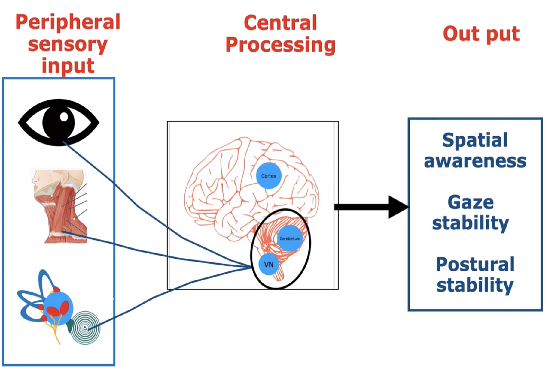
Balance control is a complex mechanism achieved by interactions between peripheral (sensory) and central (brain) structures.
Peripherally, vision, proprioception and vestibular (Inner ear) systems contribute to balance control. Centrally, structures within the brainstem, cerebellum and several other brain areas are involved in processing the balance signals.
The multi-sensory balance signals help achieve balance control out puts such as spatial orientation, gaze stability and postural stability. The vestibular system is exclusively responsible for sensing static position and dynamic movements of the head.
What is the role of vestibular system in balance control?
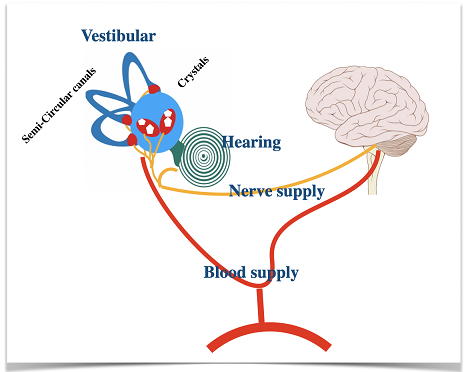
Peripherally, the vestibular system includes the labyrinth which contains two main structures: the cochlea which is the hearing organ and vestibular apparatus which is the organ for maintaining the balance, stability, and spatial orientation.
The vestibular system is an apparatus in the inner ear that helps with maintaining postural equilibrium. The information provided by the vestibular system is required for coordinating the position of head and eye movements.
Do you know what dizziness and vertigo means?
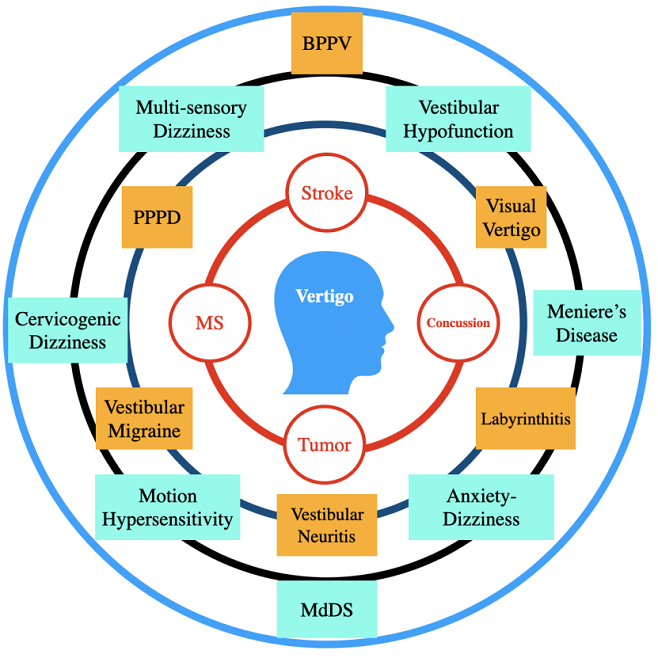
Dizziness/vertigo is not a condition. It is merely a symptom of an underlying condition. The causes of dizziness/vertigo can range from trivial causes such as feeling dizzy when we stand up quickly after sitting for a while to life-threatening conditions such as stroke and brain tumour. Fortunately, the most commonly occurring dizziness are due to benign conditions such as BPPV, Vestibular migraine, age-related multi-sensory balance issues and PPPD.
Dizziness is a non-specific term used to describe a range of sensations. It can mean a range of different descriptions. After assessment the clinicians categorise the descriptions into one of the following subtypes.
- Vertigo- Room-spinning or head-spinning sensation
- Pre-syncope- Faint-like feeling
- Disequilibrium - Unsteadiness
- Light-headedness
Comprehensive vestibular assessment is needed to diagnose most of the common vestibular disorders. Imaging such as MRI, CT scan, bloods tests etc are needed to rule out stroke, brain tumours etc.

What causes dizziness/vertigo?
Dizziness & Anxiety
A patient can have both dizziness and anxiety
While anxiety can cause dizziness, dizziness-induced anxiety is very common too.
If the root cause of dizziness is anxiety then the anxiety needs to be tackled by
medical and psychological therapy.
If the anxiety was induced by dizziness, then correct diagnosis of the cause of the
dizziness and appropriate treatment (VRT) of it along with patient education can
help ease the anxiety. However, if the anxiety is severe, or not improving with VRT
alone then the patient would require medical and psychological therapy.
Labyrinthitis
Inflammation of the labyrinth causes vertigo, unsteadiness and LOSS of HEARING.
Both viral and bacterial infections cause labyrinthitis. Unless it is a bacterial infection the labyrinthitis is unlikely to recur.
Labyrinthitis causes acute vestibular loss (vertigo & unsteadiness). Lack of appropriate treatment leads to chronic vestibular hypofunction and other secondary
complications
While medication therapy is helpful for short-term symptomatic relief at the acute
stage, long-term use of it can hinder the natural recovery and certain medications
can even cause untoward side effects such as Parkinsonism.
Meniere's Disease
Meniere's disease comes in attacks of vertigo lasting for minutes to hours along with hearing loss. In the early stages of the disease, hearing loss is fluctuating, meaning that the hearing will recover after each acute attack, however, it may become permanent as the disease progresses. In some patients, it can affect both sides.
As for the control of the acute attacks, medication therapy and food and lifestyle changes play a significant role.
Vestibular physiotherapy is not helpful during acute attacks, however, it can be very helpful between the attacks to improve balance and reduce motion hypersensitivity and other secondary issues.
Visual Dependency/ Vertigo
Certain visual conditions such as walking in the dark, busy supermarkets,
watching fast-moving scenes on television or cinema and lack of vision
(standing with eyes closed) causes dizziness and unsteadiness. This happens
because of the visual dependency for balance control.
Customised balance exercises help improve the visual dependency and
visual vertigo
Vestibular Hypofunction
Lack of /reduced vestibular signals will lead to vestibular hypofunction.
Labyrinthitis, vestibular neuritis, concussion of the vestibular systems and ototoxicity can cause acute vestibular hypofunction. Untreated acute vestibular problems lead to chronic
vestibular hypofunction. Additionally, in elderly people age-related deterioration of the
inner system also lead to vestibular hypofunction.
Vestibular physiotherapy help diagnose and treat both acute and chronic vestibular
hypofunction.
BPPV - Benign Paroxysmal Positional Vertigo
BPPV is caused by free-floating crystals within the semi-circular canal.
The free-floating crystals can be present in any of the 3 semicircular canals.
Therefore, all three canals need to be tested with respective positional tests BPPV is treated with positional manoeuvres.
Epley will only work in cases of posterior canal BPPV and it will not work for the other canals Medications, Brandt-Daroff exercises and Cooksey-Cawthorne exercises do not help cure BPPV.
Multi-sensory Dizziness
Balance control is a multi-sensory process involving vision, muscles and joints, inner ear balance system and brain. Involvement of all three peripheral balance
systems result in multi-sensory dizziness. It is common in elderly people and it increases the risk of falling in this age group significantly.
A comprehensive balance assessment including falls risk assessment and targeted balance exercises including education on falls prevention help improve balance reduce and reduce the risk of falls.
Persistent Postural-Perceptual Dizziness (PPPD)
PPPD is a functional vestibular condition caused by both vestibular and non-vestibular causes.
In PPPD the vestibular symptoms are persistent on most days and triggered/aggravated by certain postures, head and body movements
and visual environments.
Subjective diagnostic criteria is used for the diagnosis of PPPD It is treated with customised VRT and may require medication therapy
and psychological counselling.
Cervicogenic Dizziness
Neck’s proprioceptive input is an integral part of the balance control mechanism. Therefore, issues affecting the neck such as arthritis, whiplash and neck pain can cause dizziness and unsteadiness.
Similarly, patients with dizziness are more likely to develop neck pain due to the dizziness-imposed neck stiffness.
Cervicogenic dizziness benefits from customised physiotherapy
Vestibular Migraine (VM)
Vestibular migraine can cause vestibular symptoms such as vertigo, dizziness and unsteadiness.
VM can happen without headaches too.
VM symptoms type and duration can mimic BPPV, VN, TIA and Meniere’s disease etc.
This chameleon nature of the VN can confuse both the clinicians and patients.
VM is diagnosed based on A1.6.6 Vestibular migraine - ICHD-3 and elimination of other
possible causes.
Treatment of VM consists of food and lifestyle modification, medication therapy and
customised VRT.
Motion Hypersensitivity (MHS)
MHS is a functional vestibular disorder in which certain head and body
movements and positional changes induce dizziness. This can mimic BPPV.
Habituation exercises help reduce motion hypersensitivity.
Vestibular Neuritis (VN)
Inflammation of the vestibular nerve causes vertigo, unsteadiness. But it does not affect the HEARING.
However, erroneously patients were given a diagnosis of labyrinthitis when hearing was not affected with the acute vertigo attack.
Viral infections cause vestibular neuritis, therefore, it's unlikely that it will recur.
Lack of appropriate treatment leads to chronic vestibular hypofunction While medication therapy is helpful for short-term symptomatic relief at the
acute stage, long-term use of it can hinder the natural recovery and certain
medications can even cause untoward side effects such as Parkinsonism.
Correct diagnosis and early start of vestibular physiotherapy significantly improves the outcome
Mal de débarquement syndrome (MdDS)
MdDS sufferers experience sensations of rocking, bobbing or swaying.
These symptoms are more pronounced when standing still compared to
walking.
MdDS occurs commonly after a cruise, however, sometimes MdDS like
symptoms can occur without being on a cruise (Pseudo MdDS).
Readaptation of the VRT and sensory reweighing training helps reduce
the MdDS symptoms. In cases of the pseudo MdDS, diagnosing and
addressing the underlying cause of it, in addition to the readptation of the
VOR and sensory reweighing training will help improve the symptoms.
Storke - Central Vestibular Dizziness
Stroke affecting the balance controlling part of the brain (midbrain &
cerebellum etc) causes vestibular symptoms such as vertigo, dizziness
and unsteadiness.
In addition to regular physiotherapy, these patients will require
vestibular and balance specific exercises to address the vestibular
symptoms.
Head injury/Concussion
Head injury/Concussion frequently causes dizziness , vertigo and unsteadiness due to the
impact on the vestibular systems and or balance controlling part of the brain such as
midbrain and cerebellum etc.
Dizziness in patients with head injury/concussion often erroneously seen as symptom of the
post-traumatic stress. As a result, underlying real issues often left unrecognised and untreated.
Vestibular physiotherapy is beneficial to reduce dizziness and improve balance in patients
with concussion /head injury.
Acoustic neuroma
A slow-growing tumour on the vestibulocochlear nerve (balance & hearing) causes
dizziness, unsteadiness and gradual worsening of hearing on the affected side along
with other signs.
Though this is rare, in patients with above presentation acoustic neuroma needs to
be ruled out. Your doctor might refer you to a neurologist/ENT to get this checked.
Post-operative vestibular and balance physiotherapy is helpful in patients who
underwent surgical treatment.
Multiple Sclerosis (MS)
Dizziness is common in patients with multiple sclerosis. While there could be
many reasons, peripheral and central vestibular causes need to be evaluated
and addressed appropriately.
Vestibular physiotherapy can be helpful to address vestibular issues in MS.
Vertigo
Vertigo = Room /head spinning sensation
It is not a condition, it is a symptom of an underlying condition(s).
Therefore, treatment of vertigo should begin with the correct diagnosis of the
underlying cause of it
Unfortunately, vast majority of the patients with vertigo are being treated
symptomatically without diagnosing the underlying cause of it. As a result, patients
continue to suffer from it for months to years without a relief.
“Not all vertigo is BPPV”
Apart from BPPV, vertigo is present in a lot of other vestibular conditions. To treat
vertigo successfully, the underlying cause needs to be diagnosed correctly, rather
than assuming it is BPPV and treating it with Epley.
Dizziness/vertigo is not a condition it is merely a symptom of an underlying condition. The causes of dizziness/vertigo can range from trivial causes such as feeling dizzy when we stand up quickly after sitting for a while to life-threatening conditions such as stroke and brain tumour. Fortunately, the most commonly occurring dizziness are due to benign conditions such as BPPV, Vestibular migraine, age-related multi-sensory balance issues and PPPD.
The vestibular-specific examination is helpful to diagnose most of the common vestibular disorders. Except in rare cases such as stroke and brain tumours, investigations such as MRI, CT scan and blood tests are not helpful to diagnose dizziness
What is Vestibular Rehabilitation Therapy (VRT)?
Vestibular rehabilitation therapy (VRT) is designed to alleviate both primary and secondary problems arising from vestibular disorders. It involves a customised exercise-based program designed to reduce vertigo and dizziness, reduce gaze instability, and reduce imbalance and falls risk. It will also address any secondary impairments resulting from vestibular disorders.

VESTIBULAR FACTS!
- 1 in 3 people aged 40 years and 85% of people aged 80 years and above are suffering from vestibular balance problems ( Y Agrawal ).
- Over 80% of people with vestibular disorders are reported to be experiencing impacts in their daily activities and seek medical help or sick leave ( Neuhauser HK)
- Causes of Dizziness
Vestibular causes
Non-Vestibular causes
Multi-sensory issues - Bronstein AM,et al found that due to dizziness
27% people change their job
21% gave up work
50% reduced efficiency at work
57% disruption in social life,
35% family difficulties
50% difficulties with travel - A UK based study found that patients had to wait nearly two years (on average 90+ weeks, range - 14 to 202 weeks) for the diagnosis and treatment of their BPPV. (D. W. Fife, John Fitzgerald 2005)
- Delayed diagnosis and treatment of BPPV will have negative impacts on both patients and their carers in terms of cost and quality of life Vestibular patients are not optimally managed in the Emergency Department. BPPV patients are unnecessarily tested with CT and MRI and treated with vestibular medications, which are not indicated (David E. Newman-Toker)
- Frequent error occurs in the acute setting in differentiating central from peripheral causes of vertigo. Over 40% of initial ED diagnoses were later corrected; 6% of serious cases were revised as benign and 23% serious cases were revised as benign.
- Peripheral vestibular diagnostic tests (Dix-Hallpike, Head Thrust Test etc.)for dizziness are scarcely used in the primary care
Medication therapy for dizziness
- Medical therapy for BPPV: Routine use of vestibular suppressants are not recommended for the treatment of BPPV
- Use of vestibular suppressants in patients with BPPV could obscure the clinical presentation of BPPV such as positional nystagmus during BPPV.
Harmful effect of vestibular medication
Long term use of vestibular medication can potentially ….
- Interfere with central compensation for a vestibular disorder
- Cause cognitive dysfunction
- Increase the risk of falls
- Drug-induced Parkinsonism
Vestibular Physiotherapy for dizziness
- Vestibular physiotherapy is effective to correctly diagnose and safely treat all types of BPPV
- Vestibular physiotherapy is safe and effective to treat vestibular hypofunction (labyrinthitis, vestibular neuritis etc.)
- Vestibular physiotherapy reduces dizziness, improves balance, reduces the risk of falling and improves balance confidence and activities of daily living.
References
- Agrawal, Y., Carey, J.P., et al. (2009) Disorders of Balance and Vestibular Function in US Adults: Data from the National Health and Nutrition Examination Survey. Arch Intern Med. 169(10), pp. 938-944.
- Bhattacharya, N., Gubbels, S.P., Schwartz, S.R et al. (2017) Clinical practice guideline: Benign paroxysmal positional vertigo (update) Otolaryngol Head & Neck Surgery. 156(3), pp. S1-S47.
- Blakley, B.W., Goebel, J. (2001) The Meaning of the Word “Vertigo” Otolaryngol. Head and Neck Surgery. 125, pp. 147-150.
- Braddom, R.L. (2000) Physical Medicine and Rehabilitation.2 nd edition. Saunders, Philadelphia, USA.
- Bronstein, A.M.(2002). "Visual and psychological aspects of vestibular disease". Current Opinion in Neurology 15 (1), pp. 1-3.
- Burton M. J., Monsell E. M., Rosenfeld, R.M. (2008). "Extracts from the cochrane library: Vestibular rehabilitation for unilateral peripheral vestibular dysfunction (review)". Otolaryngology - Head and Neck Surgery 138(4), pp. 415-417.
- Dros, J., Maarsingh, O.R., Vander Horst, H,E., Bindels, P.J., Ter Riet, G et al. (2010) Tests used to diagnose dizziness in Primary Care: A systematic review. CMAJ. 182(13), pp. E621-631.
- Elwyn, G., Edwards, A., Kinnersley, P., Grol, R. (2000) Shared Decision Making and the Concept of Equipoise: The Competences of Involving Patients in Healthcare Choices. British Journal of General Practice. 50, pp. 892-897.
- Fife, D., and Fitzgerald, J.E. (2005) Do Patients with Benign Paroxysmal Positional Vertigo receive prompt treatment? Analysis of waiting times and human and financial costs associated with Current Practice. Int Jour Audiol. 44, pp. 50-57.
- Gottshall, K,R., Hoffer, M.E., Moore, R.J., Balough, B,J. (2005) The Role of Vestibular Rehabilitation in the Treatment of Meniere's disease. Otolaryngol. Head and Neck Surgery. 133, pp. 326-328.
- Hillier,S,I., Holohan, V. (2007) Vestibular Rehabilitation for Unilateral Peripheral Vestibular Dysfunction. Cochrane Database Systematic Review.
- Hoffer, M.E., Gottshall, K.R., Moore, R., Balough, B.J., wester, D. (2004) Characterizing and treating dizziness after mild Head trauma. Otol Neurotol. 25, pp. 135-138.
- https://vestibular.org/article/what-is-vestibular/causes-of-dizziness/
- Marchetti, G.F., Whitney, S.L., Blatt, P,J., Morris, L.O., Vance, J.M. (2008) Temporal and Spatial characteristics of gait during the performance of Dynamic Gait Index in people with and people without balance or vestibular disorders. Phys. Ther. 88, pp. 640-651.
- Neuhaser, H.K. (2007) Epidemiology of vertigo. Curr Opin Neurol. 20(1), pp. 40-46.
- Newman-Toker, D.E., Camargo, C.A., Hsieh, Y., et al. (2009) Disconnect between Charted Vestibular diagnoses and Emergency Department Management Decisions: A Cross-sectional Analysis from a National Representative Sample. Acad Emerg Med. 16, pp. 970-977.
- Purves, D., Augustine, G.J., Fitzpatrick, D et al. (2004 ) Vestibular Pathways to the Thalamus and Cortex, Neuroscience. 3 rd edition. Sunderland, Massachusetts U.S.A: Sinauer Associates.
- Royl, G et.al (2011) Dizziness in the Emergency room: Diagnoses and misdiagnoses. Eur Neurol. 66, pp. 256-263.
- Shumway-Cook A, Woollacott M. (2007) Motor Control: translating research into clinical practice. 3 rd edition. Lippincott Williams & Wilkins, Philadelphia, USA.
- Whitney, S,L., Marchetti, G.F., Pritcher, M., Furman, J.M. (2009) Gaze stabilization and gait performance in vestibular dysfunction. Gait and Posture. 29,pp. 194-198.